
 how-to
Exercises for Office Worker Back Pain: A 7-Step Guide
Table of Contents
- Why Office Workers Develop Back Pain
- What You'll Need Before You Start
- Best Exercises for Office Worker Posture
- Desk Stretches for Lower Back Pain
- How to Improve Posture at Work
- How Often Should You Do These Exercises
- Common Mistakes to Avoid
- When to Seek Professional Help
- Frequently Asked Questions
Last Updated: September 18, 2026
Why Office Workers Develop Back Pain
Office workers spend hours in chairs that don't support their spine properly. Slouching at desks tightens your hip flexors and weakens your core muscles. This imbalance pulls your spine out of alignment. (Source: the significant impact of prolonged sitting on musculoskeletal health)
The problem gets worse over time. Your shoulders round forward. Your lower back curves too much. These postural changes create muscle tension and joint stress.
Most office workers don't realise how much damage poor posture causes. You might feel fine for months. Then one morning, your back hurts. The pain often comes from years of sitting with bad form.
At Marlow Movement Clinic, we see this pattern constantly. Office workers arrive with chronic back pain that developed slowly over years. The good news: targeted exercises for office worker back pain can reverse much of this damage. Movement is the cure, not rest.
What You'll Need Before You Start
You don't need expensive equipment or a gym membership. Most exercises for office worker back pain use just your body weight.
Here's what helps:
- A yoga mat or towel (optional but cushions your spine)
- A chair with a firm seat
- A wall or door frame for stretching
- 10-15 minutes of free time
- Comfortable clothing you can move in
That's it. You can do these exercises for office worker back pain at home, at the office, or anywhere. No excuses about equipment.
Start slowly. Your body needs time to adapt. Pain is a signal to stop, don't push through sharp discomfort. Mild muscle fatigue is normal. Sharp pain means something's wrong.
Best Exercises for Office Worker Posture
The exercises that work best target three areas: your glutes, your core, and your hip flexors. Office work weakens your glutes and core while tightening your hip flexors. These exercises fix that imbalance.
Exercise 1: Cat-Cow Stretch
The cat-cow stretch mobilises your entire spine. It's one of the gentlest exercises for office worker back pain, yet it's incredibly effective.
Start on your hands and knees. Your wrists should sit under your shoulders. Your knees should sit under your hips.
For the cow phase: drop your belly toward the floor. Lift your gaze and chest upward. Your lower back arches slightly. Hold this for 2 seconds.
For the cat phase: round your spine toward the ceiling. Tuck your chin to your chest. Draw your belly in. Hold for 2 seconds.
Move slowly between positions. Breathe steadily. Do 10 rounds, moving at your own pace.
This stretch wakes up your spinal muscles and increases mobility. Office workers feel relief almost immediately because it reverses the hunched posture that causes pain.
Exercise 2: Glute Bridges
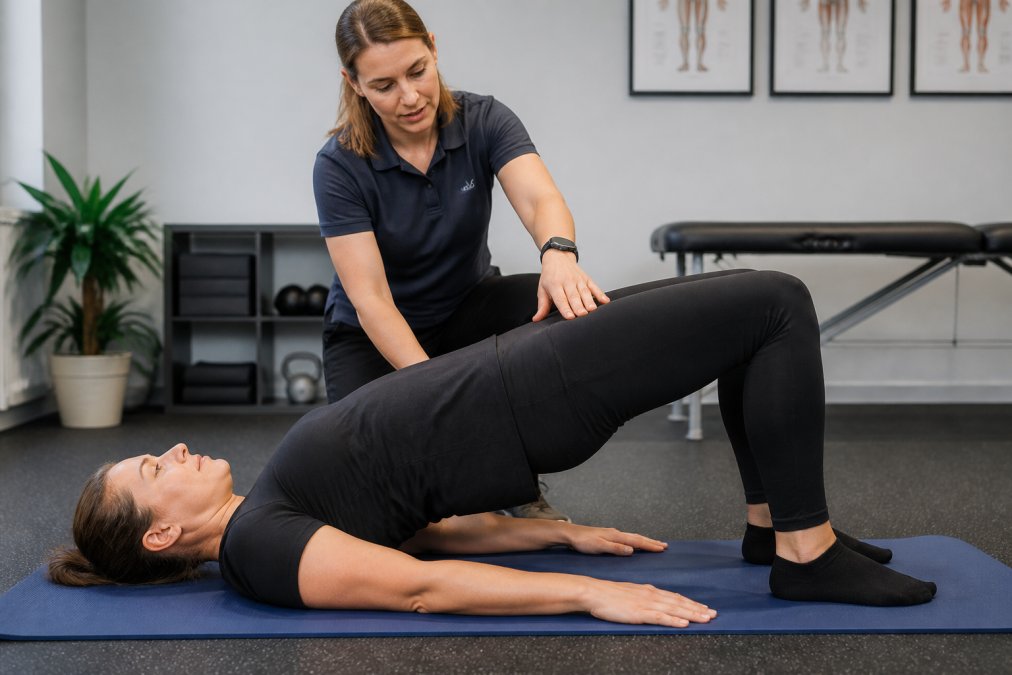
Your glutes are the most important muscle for back health. Weak glutes force your lower back to do extra work. This causes pain.
Lie on your back with knees bent. Your feet should sit flat on the floor, hip-width apart. Arms rest at your sides, palms down.
Push through your heels and lift your hips toward the ceiling. Squeeze your glutes hard at the top. Your body should form a straight line from knees to shoulders.
Hold for 2 seconds. Lower slowly. Do 15 repetitions.
Glute bridges are one of the most powerful exercises for office worker back pain. Strong glutes take pressure off your spine and fix postural imbalances. Most office workers have weak glutes from sitting all day, this exercise corrects that.
Exercise 3: Bird Dogs
Bird dogs strengthen your core and improve spinal stability. Your core muscles protect your spine during daily activities.
Start on hands and knees. Your wrists sit under shoulders. Your knees sit under hips.
Extend your right arm forward and your left leg backward. They should form a straight line with your body. Don't let your hips twist or drop.
Hold for 2 seconds. Return to starting position. Do 10 repetitions on one side, then switch.
This exercise builds the deep core muscles that support your spine. Office workers often have weak cores because sitting doesn't challenge these muscles. Bird dogs fix that weakness.
Exercise 4: Dead Bugs
Dead bugs strengthen your core while keeping your lower back safe. This is one of the best exercises for office worker back pain because it's gentle yet effective.
Lie on your back. Raise your arms straight up toward the ceiling. Lift your knees to 90 degrees so your shins are parallel to the floor.
Slowly lower your right arm overhead while straightening your right leg. Don't let your lower back arch off the floor. Return to starting position. Repeat on the other side.
Do 10 repetitions on each side. Move slowly and in a controlled manner.
Dead bugs teach your core to work while your spine stays neutral. This translates directly to better posture at your desk.
Desk Stretches for Lower Back Pain
You don't need to leave your desk to ease lower back pain. These stretches take 2 minutes and provide immediate relief.
Seated Spinal Twist
Sit upright in your chair. Keep both feet flat on the floor.
Cross your right leg over your left knee. Place your left elbow on the outside of your right knee. Gently twist your torso to the right. You should feel a stretch along your right side and lower back.
Hold for 30 seconds. Return to centre. Repeat on the other side.
This stretch releases tension in your lower back and improves spinal mobility. Office workers can do this every hour without leaving their desk.
Seated Forward Fold
Sit upright with feet flat on the floor, hip-width apart.
Hinge at your hips and fold forward. Let your arms hang down. Don't force the stretch, just let gravity do the work.
Hold for 30 seconds. Breathe deeply.
This stretch lengthens your hamstrings and lower back. Tight hamstrings pull on your lower back and cause pain. Regular stretching prevents this.
Knee-to-Chest Stretch
Sit in your chair. Pull your right knee up toward your chest. Use your hands to gently draw it closer.
Hold for 30 seconds. Lower your foot. Repeat on the other side.
This stretch targets your hip flexors and lower back. Office workers have chronically tight hip flexors from sitting. This stretch counteracts that tightness.
How to Improve Posture at Work
Your desk setup matters. Your screen should sit at eye level. Your elbows should bend at 90 degrees when typing. Your feet should rest flat on the floor.
Sit back in your chair, not perched on the edge. Your lower back should have support. If your chair doesn't provide it, add a small cushion.
Check your posture every 30 minutes. You'll probably notice you've slouched. Correct it immediately. This habit awareness is more powerful than any exercise.
Take a 2-minute movement break every hour. Stand up. Walk around. Do a few stretches. Movement breaks prevent stiffness and reset your posture.
Your shoulders should sit directly over your hips when sitting. Your ears should align with your shoulders. Your spine should have a gentle curve, not a sharp bend.
Poor posture is a habit. Breaking it takes consistency. Most office workers need 4-6 weeks of deliberate practice to build new postural habits.
How Often Should You Do These Exercises
Consistency beats intensity. Doing these exercises for office worker back pain three times per week is better than doing them once per week intensely.
Aim for three sessions per week. Each session takes 15 minutes. Space them out, don't do them on consecutive days.
On non-exercise days, do the desk stretches.
Common Mistakes to Avoid
Office workers make predictable mistakes with exercises for office worker back pain. Knowing these helps you succeed.
When to Seek Professional Help
These exercises for office worker back pain work for most office workers with mild to moderate discomfort. But some situations need professional assessment.
Seek professional help if:
- Pain started after an injury or accident
- Pain is severe or worsening despite exercises
- Pain radiates down your leg or into your buttock
- You experience numbness or tingling
- Pain interferes with sleep or daily activities
- You've had pain for more than 6 weeks without improvement
Frequently Asked Questions
What are the best exercises to relieve back pain from sitting at a desk?
Cat-cow stretches, glute bridges, bird dogs, and dead bugs are highly effective for office worker back pain. These exercises target the core, glutes, and spinal stabilisers that weaken from prolonged sitting. Combine them with desk stretches like seated spinal twists and knee-to-chest stretches for comprehensive relief. Start with 2-3 sets of 8-10 repetitions, three times weekly, and progress gradually to avoid overload.
How often should office workers stretch to prevent back pain?
Aim to stretch every 60 minutes during your working day, even for just 30secs. This breaks up static posture and maintains mobility. Additionally, perform the full exercise routine 3-4 times per week outside work hours. Consistency matters more than intensity—regular, gentle movement prevents pain better than occasional intense sessions.
Can desk-based exercises help with chronic lower back pain?
Yes, desk stretches can provide relief and support management of chronic lower back pain, particularly when combined with proper posture and professional guidance. Seated spinal twists, forward folds, and knee-to-chest stretches reduce tension and improve flexibility. However, if pain persists or worsens, consult a qualified professional for personalised assessment and treatment.
How do I know if I'm doing these exercises correctly?
Proper form is crucial to avoid injury and gain maximum benefit. Move slowly and deliberately, focusing on in a in a controlled manner manner movements rather than speed. You should feel a gentle stretch or muscle engagement, never sharp pain. If you're unsure about form or experience discomfort, a professional consultation can ensure you're performing exercises safely and effectively for your specific condition.