 how-to
How to Recover from Sprains: A Step-by-Step Guide
Last Updated: 25 October 2026
Quick Summary
To recover from sprains, follow the PRICE protocol in the first 24 hours: protect the joint with a brace, rest from painful activities, apply ice for 15-20 minutes several times daily, compress with a firm wrap, and elevate above heart level. Recovery timelines range from 1-3 weeks for mild sprains to 8-12 weeks for severe ones, with structured rehabilitation exercises progressing through three phases.
- Apply PRICE protocol within the first 24 hours, with protection and compression being as important as ice and rest
- Mild sprains typically heal in 1-3 weeks, moderate sprains in 4-6 weeks, and severe sprains in 8-12 weeks or longer
- Begin gentle mobility exercises on days 2-3, progress to strengthening in weeks 2-4, then sport-specific preparation in weeks 4-8
- Balance and proprioception exercises prevent future sprains and should not be skipped during rehabilitation
- Return to sport gradually using a structured timeline, starting at 50% intensity and increasing by 10-20% weekly only when pain-free
Table of Contents
- Understand Your Sprain and Initial Care
- How Long Does a Sprain Take to Heal
- When to See a Doctor for a Sprain
- Sprain Recovery Exercises for Progressive Healing
- Return to Sport After Ankle Sprain and Other Injuries
- Common Mistakes That Slow Recovery
- Get Professional Support to Recover from Sprains Safely
- Frequently Asked Questions
Understand Your Sprain and Initial Care
A sprain happens when you stretch or tear the ligaments that hold your joints together. Ligaments are tough bands of tissue that keep bones stable. When you twist an ankle, wrench a wrist, or fall awkwardly, these ligaments can overstretch or tear.
The severity varies. A mild sprain might feel like a minor twist. A severe one can leave you unable to put weight on the joint. Most sprains fall somewhere in between.
At Marlow Movement Clinic, we see sprains across all activity levels. Office workers twist ankles on stairs. Runners land badly mid-stride. Weekend athletes push too hard. The common thread is this: how you respond in the first 24 hours shapes your entire recovery.
What happens when you sprain a joint
When a ligament tears, your body responds with inflammation. Swelling protects the joint by limiting movement. Pain signals tell you to stop using it. This is your body's natural defence mechanism.
But here's what many people get wrong: inflammation itself isn't the enemy. It's part of healing. Too much swelling causes problems. Too little means your body can't repair the damage properly.
The joint also loses stability temporarily. Proprioception, your sense of where your body is in space, gets disrupted. This is why a sprained ankle feels wobbly. Your nervous system needs time to recalibrate.
The first 24 hours: PRICE protocol
The first day matters most. What you do in these hours influences how quickly you recover.
PRICE stands for Protection, Rest, Ice, Compression, and Elevation. It's the modern update to the older RICE approach (Rest, Ice, Compression, Elevation). The P, Protection, is the key addition.
Here's what each step means:
- Protection: Stop the injured joint from moving further. Use a brace, tape, or sling. Keep it safe from additional damage.
- Rest: Avoid activities that hurt. This doesn't mean complete immobility. Gentle movement within pain-free ranges helps. But stop pushing.
- Ice: Apply ice for 15-20 minutes at a time. Do this several times in the first 24 hours. Ice reduces swelling and numbs pain temporarily. Wrap ice in a cloth, never apply it directly to skin.
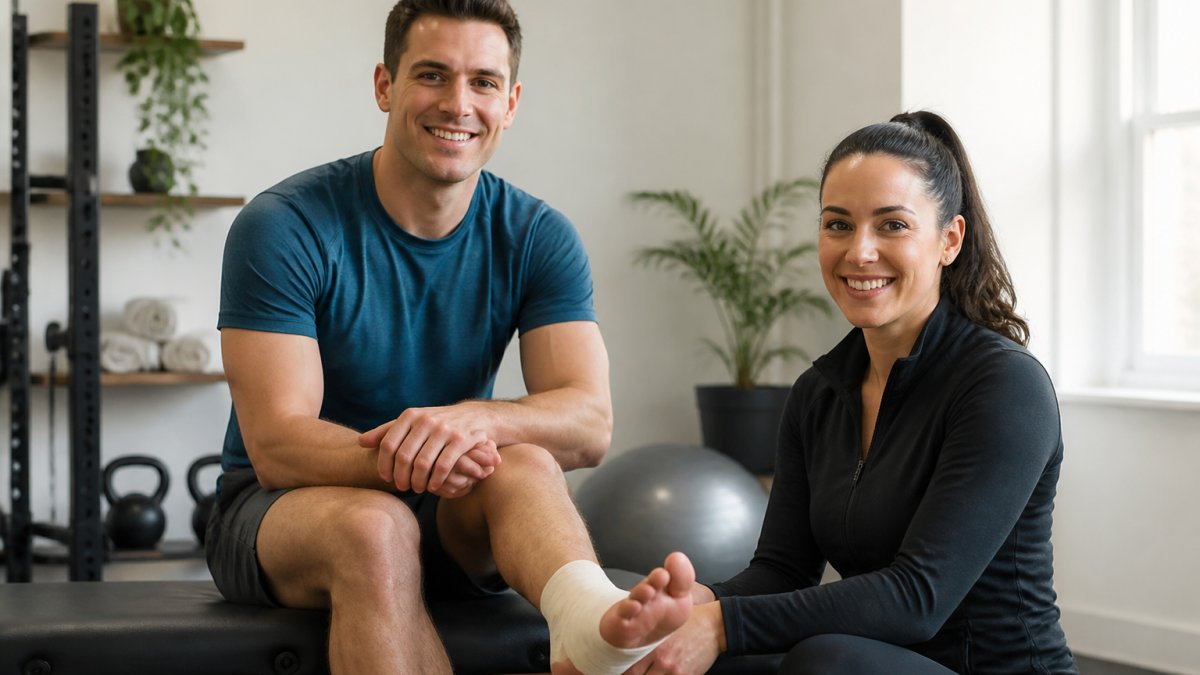
- Compression: Wrap the joint firmly (but not so tight you cut off circulation). This limits swelling. Keep the wrap on for several hours.
- Elevation: Raise the injured joint above heart level. Gravity helps fluid drain away from the swelling. Lie down with your ankle on a pillow.
Many people focus only on ice and rest. Protection and compression matter just as much. A proper wrap combined with ice and elevation does more than ice alone.
NHS guidance on sprains and strains recommends paracetamol or ibuprofen for pain. Ibuprofen also reduces inflammation. Check the package for correct dosing.
How Long Does a Sprain Take to Heal
Recovery time depends on severity. A recover from sprains timeline looks different for mild versus severe injuries.
Grade 1 (mild): Slight stretching or minor tearing. Mild pain and swelling. You can usually walk and bear weight. Recovery typically takes 1-3 weeks.
Grade 2 (moderate): Partial tear of the ligament. More significant swelling and bruising. Walking is painful. Recovery usually takes 4-6 weeks.
Grade 3 (severe): Complete tear of the ligament. Severe swelling and bruising. You cannot bear weight. Recovery takes 8-12 weeks or longer.
These timelines assume you follow proper rehabilitation. Skipping exercises or returning to activity too soon extends recovery. Conversely, progressing appropriately can speed it up.
The first 2 weeks are the most critical. Swelling peaks around 48 hours after injury, then gradually decreases. By week 2, you should notice improvement.
When to See a Doctor for a Sprain
Not every sprain needs professional assessment. But certain situations demand it.
See a doctor if:
- You cannot put any weight on the joint
- The swelling is severe or worsens after 48 hours
- You have significant bruising
- The pain is severe or doesn't improve with rest and ice
- You heard a pop or felt the joint shift
- You have numbness, tingling, or colour changes in the limb
- The injury doesn't improve after 2 weeks of self-care
A professional assessment rules out fractures, complete ligament tears, or other serious damage. NHS assessment guidance for sprains recommends seeking advice if you're unsure about severity.
You can book an initial assessment to get professional evaluation of your sprain and personalised recovery guidance. A Graduate Sports Therapist can assess the injury, determine severity, and create a tailored rehabilitation plan.
Sprain Recovery Exercises for Progressive Healing
Movement is medicine. But timing matters. The right exercises at the wrong stage can slow recovery.
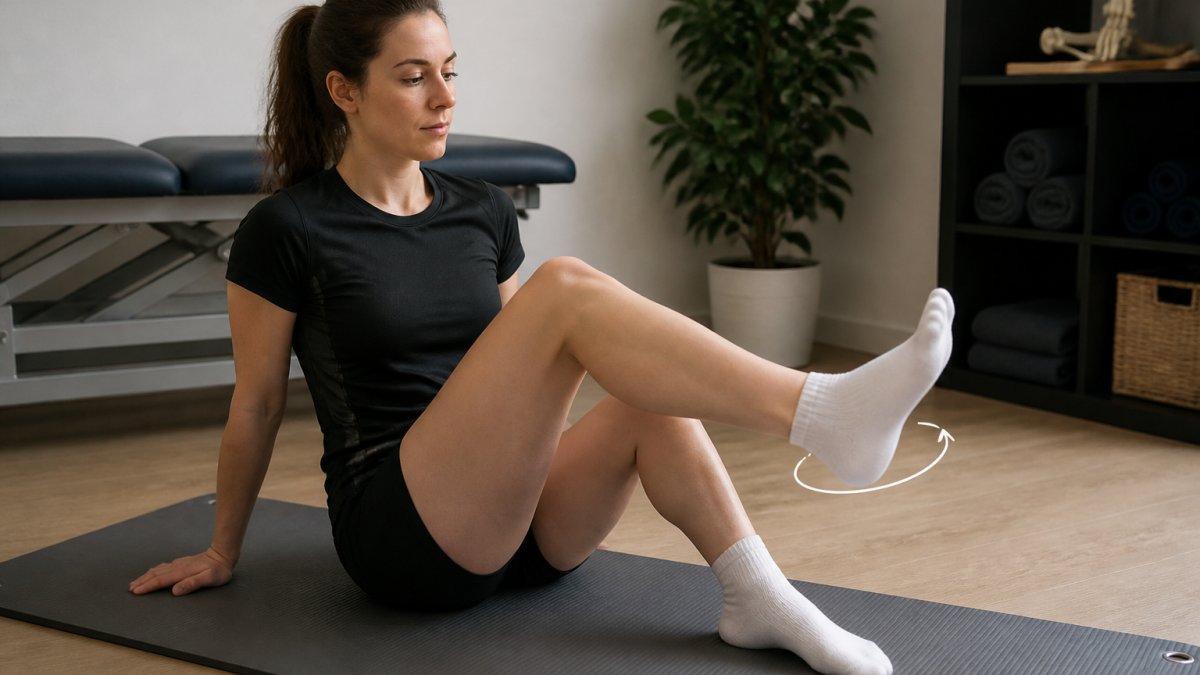
Rehabilitation progresses through three phases. Each builds on the last.
Check availability and book online →
Phase 1: Gentle mobility work (days 1-7)
The goal here is movement without stress. Your joint needs to remember how to move. Pain should be minimal.
Start these exercises on day 2 or 3 after injury (not immediately). Do them gently. Stop if sharp pain occurs.
Ankle alphabet: Sit with your leg elevated. Use your ankle to "write" letters in the air.
Gentle ankle circles: Rotate your ankle slowly in both directions. Small circles only. Ten rotations each way.
Calf stretches: Stand facing a wall. Step one leg forward. Keep the back heel on the ground.
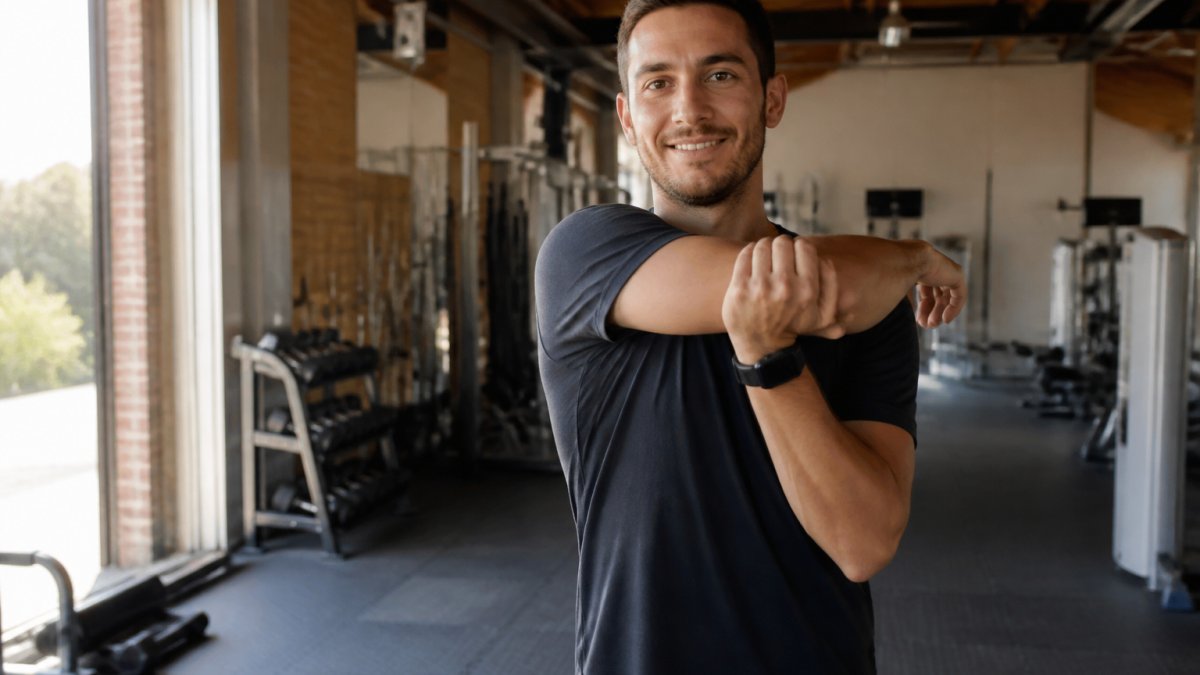
Wrist or shoulder flexion: For upper-limb sprains, move the joint through its pain-free range. Raise your arm slowly.
Do these exercises 2-3 times daily. They take just a few minutes. The goal is movement, not strength.
Phase 2: Strengthening and balance (weeks 2-4)
Once swelling reduces and basic movement returns, add resistance. This phase rebuilds strength in the damaged ligaments.
Resistance band work: Loop a resistance band around your foot. Point your toes against the band. Hold 2 seconds.
Balance exercises: Stand on the injured leg for 20-30 seconds. Hold a wall for safety. Progress to standing without support.
Calf raises: Stand with feet hip-width apart. Rise up onto your toes. Lower back down. Repeat 15 times. Do 3 sets.
Isometric holds: Tense the muscles around the injured joint without moving it. Hold for 5-10 seconds. Relax. Repeat 10 times.
These exercises should feel challenging but not painful. Mild discomfort is normal. Sharp pain means you're pushing too hard.
Phase 3: Sport-specific preparation (weeks 4-8)
Once strength and balance return, prepare for your actual activities. This phase mimics the movements you'll do.
Running drills: If you're a runner, start with walking. Progress to light jogging on flat ground. Add gentle turns.
Agility work: Set up cones or markers. Walk around them. Progress to light running around them.
Sport-specific movements: Replicate the actions from your sport. A footballer practices kicking. A tennis player practices lateral movement. Start slowly.
Progressive loading: Increase the demands week by week. If jogging feels easy, add slight inclines.
This phase typically takes 2-4 weeks. Don't rush it. Returning to full activity too soon is the main reason people re-injure themselves.
Rehabilitation progresses through three phases, each with specific exercises suited to that stage of recovery.
Phase | Timing | Goal | Example exercises |
|---|---|---|---|
Phase 1: Gentle mobility | Days 1-7 | Movement without stress | Ankle alphabet, gentle circles, calf stretches |
Phase 2: Strengthening and balance | Weeks 2-4 | Rebuild strength and proprioception | Resistance band work, balance exercises, calf raises |
Phase 3: Sport-specific preparation | Weeks 4-8 | Prepare for actual activities | Running drills, agility work, progressive loading |
Return to Sport After Ankle Sprain and Other Injuries
Returning to sport is the moment most athletes anticipate. It's also where many make mistakes.
The urge to get back is strong. But returning too soon risks re-injury.
Use this framework:
Week 1-2 after injury: Rest and protection. No sport. Focus on PRICE and gentle mobility.
Week 2-4: Light activity. Walking, swimming (if the joint is pain-free), or cycling. No twisting or impact.
Week 4-6: Moderate activity. Return to training if pain-free. Avoid high-impact movements and changes of direction.
Check availability and book online →
Week 6+: Gradual return to sport. Start at 50% intensity. Increase by 10-20% weekly.
A key test: Can you do a single-leg hop without pain? Can you change direction quickly?
Research on sprain recovery protocols shows that structured rehabilitation reduces re-injury risk significantly.
You can explore guidance on recurring sports injuries to understand how to prevent re-injury after returning to sport.
Common Mistakes That Slow Recovery
Most people make at least one of these errors. Recognising them helps you avoid them.
Immobilising too long: Complete rest beyond the first few days actually slows healing.
Skipping ice: Some people think ice interferes with healing. It doesn't.
Returning to activity too soon: This is the biggest mistake. Pain decreases faster than strength returns.
Ignoring proprioception training: Balance and awareness exercises feel silly. They're not. They prevent future sprains. Do them.
Using only pain as a guide: Pain fades before full recovery.
Not addressing the cause: Did you trip because you weren't paying attention? Did your shoe lack support?
Skipping strengthening: Gentle mobility is good. Strengthening is essential.
Get Professional Support to Recover from Sprains Safely
Self-care works for mild sprains. But moderate to severe injuries benefit from professional guidance.
A Graduate Sports Therapist assesses your injury accurately. We identify what's actually damaged.
At Marlow Movement Clinic, we specialise in musculoskeletal injuries. That includes sprains across ankles, wrists, knees, and shoulders.
We use soft tissue mobilisation to reduce swelling. We teach you exercises that actually work.
Sports therapy for acute injury management confirms that professional guidance accelerates recovery and reduces complications.
You can explore our injury management approach to understand how we support sprain recovery. We also offer sports massage and deep tissue remedial treatment to complement your rehabilitation exercises.
Many clients ask about cost and commitment. We offer free 15-minute phone consultations. Same-day appointments are often available.
The question isn't whether you can recover alone. Many people do.
Recovering from a sprain doesn't have to mean months of limitation.
Frequently Asked Questions
What is the best way to recover from a sprain?
The best way to recover from sprains involves three phases: immediate care using PRICE (protection, rest, ice, compression, elevation), gradual progression to gentle movement and strengthening exercises, and structured return to activity. Start with rest and protection in the first 24-48 hours, then move to controlled exercises as pain settles. A Graduate Sports Therapist can create a personalised plan tailored to your injury severity and goals, ensuring you progress safely without re-injury.
How long does a sprain take to heal?
Healing time varies by severity. Grade 1 sprains (mild) typically heal in 1-3 weeks, Grade 2 (moderate) in 3-6 weeks, and Grade 3 (severe) in 8-12 weeks or longer. However, tissue healing and functional recovery are different. You may feel better before the joint is fully stable, which is why progressive exercise matters. Many people return to light activity within 2-4 weeks but need 6-8 weeks for full sport-specific function.
When should I see a doctor for a sprain?
Seek medical assessment if you cannot bear weight, suspect a fracture, experience severe swelling or bruising, have signs of nerve or blood vessel damage (numbness, tingling, colour changes), or if pain and swelling worsen after 48 hours of PRICE care. Also see a doctor if the injury doesn't improve within two weeks or if you have recurring sprains. A Graduate Sports Therapist can assess whether your sprain needs imaging or medical referral.
What is the difference between physiotherapy and sports therapy?
Both professions share the same graduate anatomy and physiology foundation. Physiotherapy training focuses on helping people regain basic function for home and work after illness or injury. Sports Therapy specialises in musculoskeletal pain and out-patient rehabilitation from the start, targeting people who can manage daily tasks but struggle returning to exercise or sport. Sports Therapy emphasises exercise physiology, biomechanics, and sport-specific rehabilitation to get you back to the activities you enjoy.