 how-to
How to Fix Chronic Lower Back Pain: A Step-by-Step Guide
Table of Contents
- Understanding Chronic Lower Back Pain
- What You'll Need Before Starting
- Step 1: Get a Professional Assessment
- Step 2: Start Movement-Based Rehabilitation
- Sports Therapy for Non-Athletes with Pain
- How Long Does It Take to Recover from Chronic Back Pain
- NICE Guidelines for Back Pain Management
- Common Mistakes to Avoid
- Frequently Asked Questions
Last Updated: September 23, 2026
Understanding Chronic Lower Back Pain
Chronic lower back pain is nagging pain in the lower back that persists for more than 12 weeks. It’s normally pain that comes and goes and is one of the most common reasons people seek medical help, affecting millions across the country. Unlike traumatic back pain that occurs after a fall or collision, chronic lower back pain develops gradually or continues long after the initial damage has healed, but can flare up intermittently.
The condition often stems from multiple contributing factors. Hours at a desk or behind a wheel, weak core muscles, tight and/or weak hip muscles, or previous injuries can all contribute. Sometimes there's no single obvious cause, it's how your body has adapted over months or years of maladaptive movement patterns.
Understanding what's driving your pain is the first step toward fixing it. The good news is that most people with chronic lower back pain can improve significantly with the right approach. Movement, not rest, is usually the answer.
What You'll Need Before Starting
Before you begin any rehabilitation programme, gather a few essentials:
- A healthcare professional's assessment, this is non-negotiable and we'll cover why in the next section
- A quiet space, somewhere you can move freely without distractions, roughly 2 metres by 2 metres
- A yoga mat or towel, for floor-based exercises
- Comfortable clothing, nothing restrictive; you need full range of motion
- A foam roller or rolled-up towel, optional but helpful for self-massage
- Realistic expectations, recovery can take weeks, not days
You don't need expensive equipment or a gym membership. Most effective exercises use just your body weight. The key is consistency and proper form.
Step 1: Get a Professional Assessment
This is where most people can go wrong. They start exercising without understanding what's actually causing their pain.
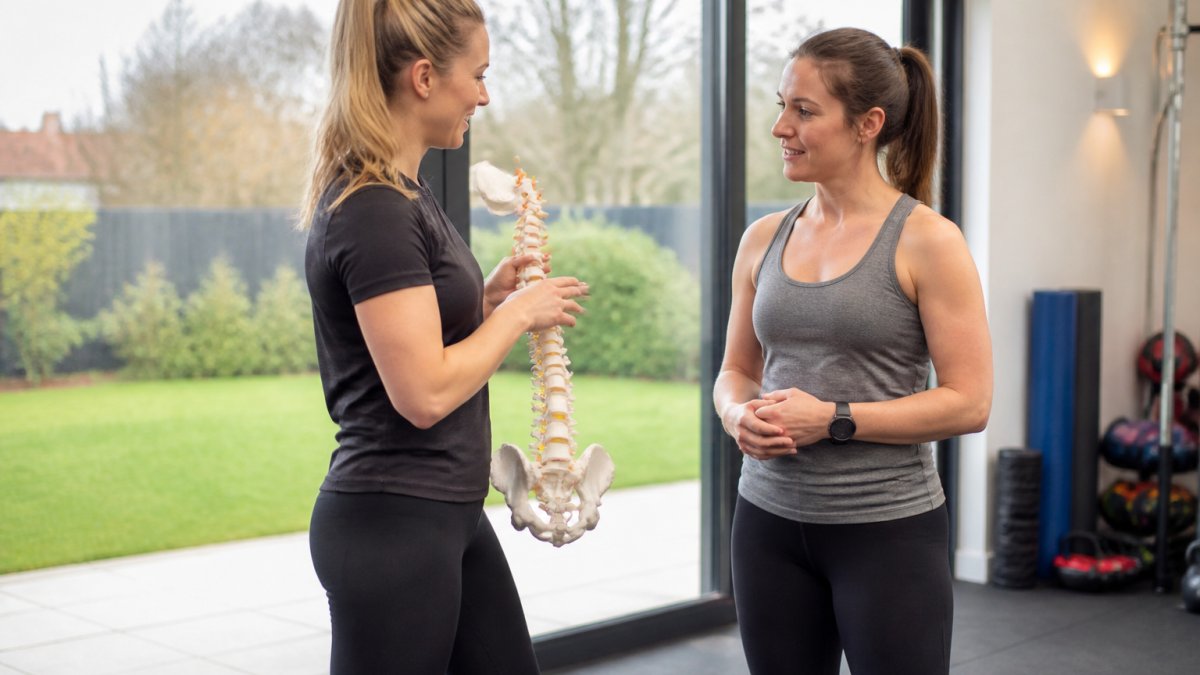
A physiotherapist or qualified healthcare professional can identify the real problem. Are your hip flexors tight? Are particular muscles weak? Do you have muscle imbalances? Is there nerve or disc involvement? The answers change what you should do.
During an assessment, expect:
- A detailed conversation about your pain history and daily activities
- Physical tests to check your range of motion, strength, and flexibility
- Identification of movement patterns that might be making things worse
- A clear explanation of what's happening in your body
Manual therapy and individualised stretching treatment that can desensitise painful muscles or joints during the session
- A personalised plan tailored to your specific situation that will sustain pain reduction or movement improvements
This step typically takes 30 to 60 minutes. Many practitioners, including those at Marlow Movement Clinic, offer the choice of a free 15-minute phone consultations to discuss your situation before booking a full appointment.
Step 2: Start Movement-Based Rehabilitation
Once you understand your problem, movement becomes your medicine.
The principle is simple: controlled, progressive movement restores function and reduces pain. This isn't about pushing through pain or "no pain, no gain." It's about moving in ways that feel safe while gradually building strength and flexibility - when rehabbing injury “No Pain IS Gain”
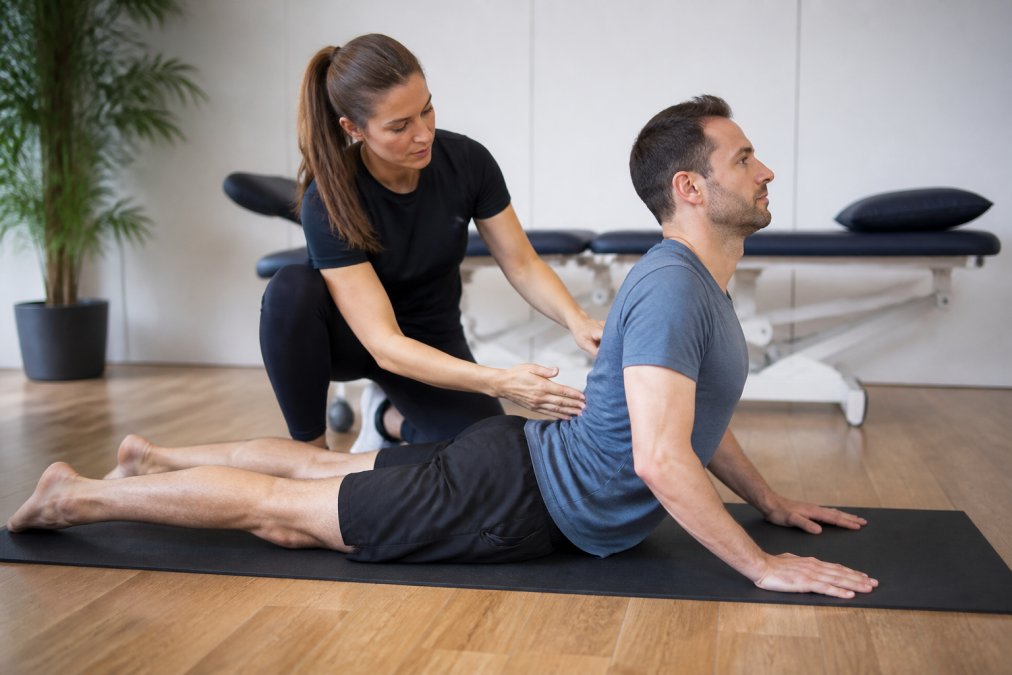
Start with these foundational movements:
Gentle spinal mobility work, spend 5 to 10 minutes moving your spine gently in all directions. Cat-cow stretches, gentle twists, and controlled hip circles help restore normal movement patterns.
Core activation exercises, your deep core muscles stabilise your spine. Begin with simple exercises like dead bugs (lying on your back, moving one arm and opposite leg slowly) or bird dogs (on hands and knees, extending opposite arm and leg). Hold each position for 3 to 5 seconds. Do 8 to 12 repetitions, 3 times per week.
Hip flexor stretches, tight hip flexors pull on your lower back. A simple lunge stretch, held for 20 to 30 seconds on each side, helps release tension.
Glute activation, weak glutes force your lower back to work harder. Glute bridges, and single-leg squats and lunges activate these muscles. Do 10 to 15 repetitions, 3 times per week.
Progress gradually. Spend 1 to 2 weeks at each level before adding difficulty. If an exercise causes sharp pain, stop and consult your healthcare provider.
Sports Therapy for Non-Athletes with Pain
You might think Sports Therapy is only for athletes recovering from sports injuries. It's not.
Office workers, people with sedentary jobs, and anyone managing chronic pain benefit enormously from Sports Therapy. The principles are identical: assess, identify movement problems, and fix them through targeted exercises and hands-on treatment.
If you spend eight hours a day at a desk, your body develops specific problems. Your hip flexors shorten. Your chest, shoulders and hips tighten. Your core can weaken. And your lower back takes all the load. Sports Therapy addresses these exact issues.
A Sports Therapist working with a non-athlete focuses on:
- Correcting postural habits that created the pain in the first place
- Building endurance in stabiliser muscles, not just strength
- Teaching you how to move safely during everyday activities
- Reducing or preferably removing your reliance on pain medication
- Preventing the pain from returning once it improves
Sessions typically involve hands-on treatment (massage, joint mobilisation) combined with exercise instruction. Your therapist shows you what to do at home, most of the work happens between appointments.
The goal isn't to get you "back to sport." It's to get you back to living without pain. That might mean returning to gardening without stiffness, sitting through a full work day comfortably, or playing with your children without limitation.
How Long Does It Take to Recover from Chronic Back Pain
This is the question everyone asks, and there's no single answer.
Recovery from chronic lower back pain depends on several factors: how long you've had the pain, what caused it, how consistently you do your exercises, and your overall health. Some people improve noticeably within 2 to 3 weeks. Others need 3 to 6 months of consistent work.
Here's what research on back pain recovery suggests:
- Weeks 1-2: You're learning the exercises and building awareness of movement patterns. Pain might not change much, but you're establishing the foundation.
- Weeks 3-6: Most people notice improvement. Pain decreases, movement feels easier, and you're sleeping better.
- Weeks 6-12: Strength builds. You can do more activities without pain flaring up. This is where real progress becomes visible.
- Months 3-6: You're returning to normal activities. The pain is minimal, and you're confident in your body again.
The catch: you need to stick with it. Stopping exercises after two weeks, even if you feel better, almost always leads to the pain returning. Think of recovery as building a new habit, not completing a short project.
NICE Guidelines for Back Pain Management
The National Institute for Health and Care Excellence (NICE) provides evidence-based guidance on managing back pain. Their recommendations are the standard across the NHS and most private practices.
According to NICE guidance on low back pain and sciatica, the recommended approach includes:
- Early movement and activity, staying active is better than resting. Gentle exercise and returning to normal activities as soon as possible speeds recovery.
- Physiotherapy and exercise, structured exercise programmes delivered by qualified professionals are effective for reducing pain and improving function.
- Manual therapy, hands-on treatment from therapists can help, particularly when combined with exercise.
- Psychological support, if pain is affecting your mood or daily life, addressing the psychological aspects helps physical recovery.
NICE explicitly recommends against prolonged rest for back pain. Bed rest actually slows recovery. Movement, even when uncomfortable, is the evidence-based treatment.
The guidance also emphasises that treatment should be tailored to the individual. What works for one person might not work for another. This is why a professional assessment matters, it ensures your treatment matches your specific situation.
Common Mistakes to Avoid
Most people with chronic lower back pain make predictable errors that delay recovery.
Resting too much. The instinct is to protect your back by avoiding movement. This weakens muscles, stiffens joints, and makes pain worse. Movement, not immobility, is the cure.
Doing exercises with poor form. One repetition with perfect form beats ten repetitions done carelessly. Quality matters more than quantity. If you're unsure about form, ask your therapist to watch you do the exercise and correct you.
Expecting overnight results. Chronic pain took months or years to develop. It won't disappear in a week. Patience is essential. Celebrate small improvements, less pain when sitting, better sleep, easier mornings.
Stopping exercises once you feel better. This is the biggest mistake. Pain relief doesn't mean you're fully recovered. Your muscles are still adapting. Continue your exercises for at least 6 to 8 weeks after pain resolves, then maintain a basic routine long-term.
Ignoring posture and daily habits. Exercises help, but if you return to slouching at your desk or lifting incorrectly, pain returns. Small postural changes throughout the day matter as much as dedicated exercise sessions.
Not addressing stress and sleep. Tension and poor sleep amplify pain perception.
Frequently Asked Questions
Can sports therapy and physiotherapy help with chronic lower back pain?
Yes. Our therapies combines hands-on treatment with guided movement to address the root causes of chronic lower back pain. A qualified therapist assesses your specific limitations and designs a personalised plan that gradually restores mobility and strength. Most people experience meaningful improvement when they follow the prescribed exercises consistently between sessions.
How long does it take to recover from chronic back pain?
Recovery timelines vary depending on how long you've had pain, its underlying cause, and how consistently you engage with your rehabilitation plan. People notice improvements within 2-4 weeks, whilst others require 8-12 weeks or longer. The key is regular movement, adherence to prescribed exercises, and professional guidance. Your ltherapist can give you a more realistic estimate after an initial assessment.
What does the NICE guidance say about managing back pain?
NICE recommends that people with back pain stay active, avoid bed rest, and consider structured exercise programmes or physiotherapy. The guidance emphasises that movement and rehabilitation are central to recovery, rather than passive treatments alone. A qualified physiotherapist can explain how these recommendations apply to your specific situation and design a plan that follows current best practice.
What exercises are safe for chronic lower back pain?
Safe exercises depend on your specific condition and pain pattern. Generally, gentle movement like walking, controlled stretching, and core stabilisation exercises are recommended. However, performing exercises incorrectly can worsen pain. A therapist should assess you first and teach you proper form. Starting slowly and progressing gradually reduces re-injury risk and builds confidence in movement.