 ultimate-guide
Evidence Based Approach to Pain Management Explained
Last Updated: 1 November 2026
Quick Summary
An evidence based approach to pain management means choosing treatments according to the best available research, clinical judgement and the individual's own goals. It asks what works for this type of problem, what the person's assessment shows, and what they want to be able to do. Plans are built around these answers rather than a single treatment for everyone.
- Acute pain usually settles as tissues heal, while chronic pain persists beyond three months.
- Strongest outcomes generally come from active rehabilitation and building the person's own capacity to move.
- Exercise should be graded and progressive, starting where the person is and increasing as symptoms allow.
- A personalised plan begins with a thorough assessment and sets clear, measurable goals.
- Follow-up sessions allow exercises to be adjusted as symptoms change and capacity grows.
Table of Contents
- What an Evidence Based Approach to Pain Management Means
- Acute Pain Versus Chronic Pain: Why the Difference Matters
- Pain Management Strategies Supported by Current Evidence
- Pain Management Through Exercise: What the Research Shows
- Building a Personalised Pain Management Plan
- Chronic Pain Management and the Multidisciplinary Team
- Measuring Progress and Booking Your First Assessment
- Frequently Asked Questions
What an Evidence Based Approach to Pain Management Means
An evidence based approach to pain management is the practice of choosing treatments according to the best available research, combined with clinical judgement and the individual's own goals. Pain is rarely a simple problem with a single fix. It sits at the intersection of tissue health, movement habits, stress, sleep and personal priorities.
The phrase can sound abstract, but in practice it asks three simple questions. What does the research say works for this type of problem? What does this person's assessment show? And what does this person actually want to be able to do? An evidence based approach to pain management answers all three before a plan is drawn up, rather than defaulting to the same treatment for everyone.
Acute Pain Versus Chronic Pain: Why the Difference Matters
Acute pain usually follows a clear injury or event and tends to settle as tissues heal. Chronic pain persists beyond the normal healing window, typically three months or more, and often continues even when the original tissue damage has resolved. The distinction matters because the goals differ: acute care focuses on protecting healing tissue and restoring movement safely, while chronic care focuses on reducing sensitivity, rebuilding capacity and returning to valued activities.
A common mistake is treating chronic pain as if it were a longer version of an acute injury. Rest and avoidance, which can make sense in the first days after a strain, often leave people more deconditioned and fearful of movement over time. Recognising which stage someone is in shapes every decision that follows. For desk-related neck pain specifically, a practical guide to managing neck pain from desk work sets out steps you can take.
Pain Management Strategies Supported by Current Evidence
Evidence-informed pain management strategies typically combine active rehabilitation, education about pain, and manual therapy used as a support rather than a replacement for exercise. Passive treatments can help temporarily, but the strongest outcomes generally come from approaches that build the person's own capacity to move and load their body.
Clinical guidelines in the UK, including those from the National Institute for Health and Care Excellence (NICE), generally favour active and self-management approaches for persistent musculoskeletal pain. Hands-on therapy can be used alongside targeted exercise and clear, practical steps between sessions. If deep buttock pain or sciatica-like symptoms are your concern, you can read about piriformis syndrome causes and treatment options.
Pain Management Through Exercise: What the Research Shows
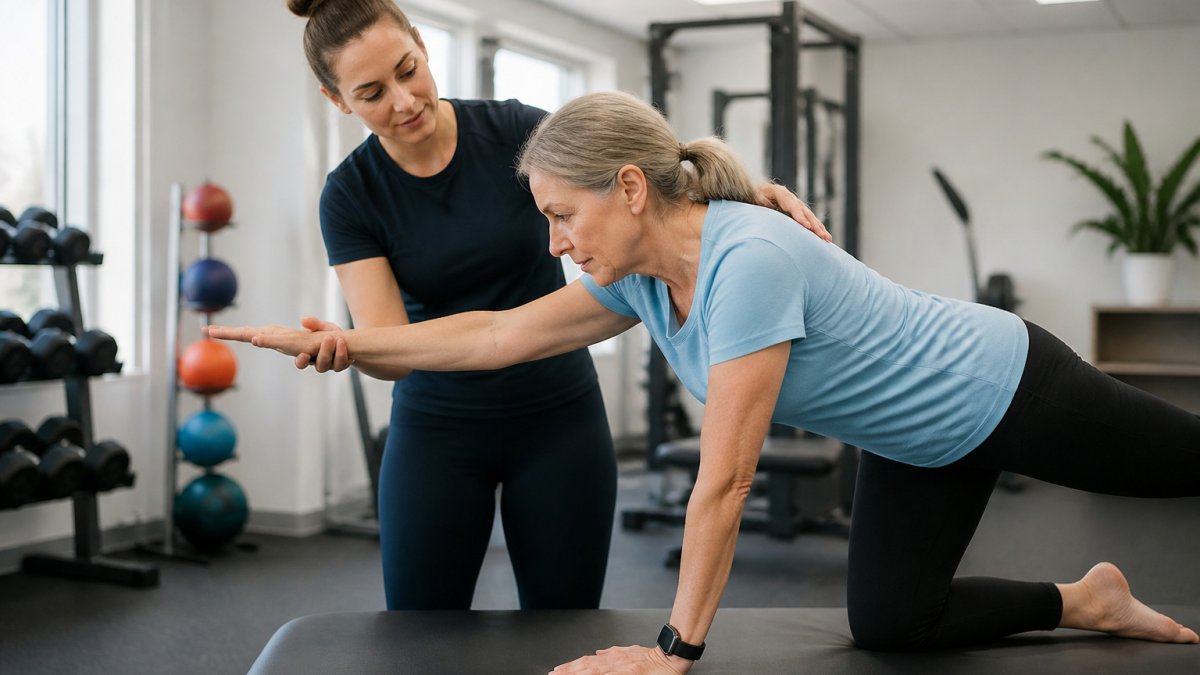
Exercise is one of the most consistently supported tools in pain management. Graded, progressive loading helps tissues adapt, improves confidence in movement and reduces the fear that often keeps people stuck. If you have pain at a desk, a structured, step-by-step set of office worker back pain exercises can help you start. The key word is graded: the dose starts where the person is and increases as their symptoms allow, rather than being either too aggressive or too cautious. If you want to move more efficiently while training, simple running technique tips to run more efficiently and reduce injury risk are a practical place to begin.
Important: NHS guidance on back pain and staying active is a useful starting point for understanding why movement is generally recommended over prolonged rest.
The table below summarises the exercise principles set out in this section, so you can see at a glance how loading is built up safely.
| Principle | What it means | Why it matters |
|---|---|---|
| Graded loading | Starts where the person is | Helps tissues adapt safely |
| Progression | Increases as symptoms allow | Avoids doing too much or too little |
| Confidence | Builds movement without fear | Reduces the fear that keeps people stuck |
Building a Personalised Pain Management Plan
A personalised plan begins with a thorough assessment, then sets clear, measurable goals. Those goals might be as specific as climbing stairs without pain, or as ambitious as returning to a weekly run. The plan then breaks the route into stages, with exercises the person can practise between sessions.
Follow-up sessions are where a plan earns its keep. Follow-up sessions allow the exercises to be adjusted as symptoms change and capacity grows. Without that review, even a well-designed plan can drift.
Check availability and book online →
Chronic Pain Management and the Multidisciplinary Team
Chronic pain rarely belongs to one profession alone. GPs, physiotherapists, sports therapists, psychologists and occupational health professionals each bring a different perspective. A sports therapist focuses on outpatient musculoskeletal rehabilitation from the start, working on the person's ability to return to the activities they enjoy.
Patient-centred care sits at the heart of this model. The person's own goals, preferences and concerns shape the plan, and their feedback is used to refine it. Where symptoms are unusual, severe or not improving, it is important to involve the GP and seek a formal medical opinion.
Measuring Progress and Booking Your First Assessment
Progress in pain management is best tracked with simple, repeatable measures: how far you can walk, how long you can sit, how many repetitions of an exercise you can complete, and how your symptoms change over the week. Recording these gives both you and your clinician a clear picture rather than relying on memory.
If you are considering an assessment, we offer free 15-minute phone consultations. You can book online through our site, and the team will explain what to expect at your first visit.
Frequently Asked Questions
What does an evidence-based approach to pain management mean?
An evidence-based approach uses the best available research, clinical guidelines and clinical expertise, combined with the individual's own goals and circumstances, to decide on treatment. It moves away from relying on tradition or untested single treatments. In practice, this means choosing interventions that have been shown to help people with similar problems, reviewing progress regularly and adjusting the plan when results fall short. Clinical guidelines from bodies such as NICE in the UK set out which options are recommended for specific conditions.
What are the main approaches to managing persistent pain?
Current guidance generally favours active approaches as the foundation of care. These include graded exercise, education about pain, and manual therapy used alongside movement rather than instead of it. Psychological approaches such as cognitive behavioural therapy are also recommended for many people with persistent pain. Passive treatments may offer short-term relief but are usually most useful when combined with an active plan. The right mix depends on the person, their pain pattern and their goals.
How can exercise help with pain management?
Exercise can reduce pain sensitivity, improve joint and muscle function, and build confidence in movement, which many people with long-term pain have lost. Starting with a load that feels manageable and increasing it gradually is usually more effective than rest alone. Exercise also helps maintain sleep, mood and general fitness. A plan should be agreed with a qualified professional, particularly if pain is severe, new or accompanied by other symptoms.
What is the difference between acute and chronic pain?
Acute pain typically comes on suddenly, often after an injury or illness, and usually settles as the tissue heals. Chronic pain is generally defined as pain that persists beyond the expected healing time, often for three months or longer. Chronic pain involves the nervous system as well as the tissues, which is why it often needs a broader approach that includes movement, education and self-management. Both types benefit from early, appropriate advice.
How is a pain management plan tailored to an individual?
A personalised plan starts with a thorough assessment of the problem, the person's daily activities, work demands, sporting goals and any other health conditions. Goals are agreed together, and the plan is built around them, with exercises and self-management steps the person can realistically carry out between sessions. The plan is reviewed and adjusted as symptoms change. Personalisation is what turns general evidence into something that works for one particular person.
When should someone seek professional help for pain?
Seek professional advice if pain persists beyond the expected recovery time, keeps returning, stops you working or doing things you enjoy, or affects your sleep. Urgent medical assessment is needed for pain with fever, unexplained weight loss, numbness or weakness, loss of bladder or bowel control, or pain following a significant accident. A qualified professional can assess the cause and advise on a suitable next step. This article provides general information and is not a substitute for individual assessment.
How can progress be measured during pain rehabilitation?
Progress is best measured using a combination of measures: the pain score a person gives themselves, changes in how far or how long they can move or exercise, and how well they manage everyday tasks at work and at home. Recording these at the start and reviewing them regularly shows whether the plan is working. Improvements that are slow but steady are usually a sign that rehabilitation is on track.
This article provides general information and is not a substitute for individual assessment. For advice about your own symptoms, speak to a qualified professional.