 ultimate-guide
Progressive Rehabilitation Plan for Runners: A 2026 Guide
Table of Contents
- Understanding Progressive Rehabilitation for Runners
- How to Start Running Again After Shin Splints
- Return to Running After Injury Plan: A Staged Approach
- Running Injury Rehabilitation Exercises: Evidence-Based Movements
- Signs You Are Ready to Run After Injury
- Common Mistakes in Rehabilitation and How to Avoid Them
- The Role of Professional Guidance in Your Recovery
- Frequently Asked Questions
Last Updated: 12 October 2026
Understanding Progressive Rehabilitation for Runners
A progressive rehabilitation plan for runners is a structured, phased approach to returning to running safely after injury. Rather than jumping straight back to your pre-injury routine, it builds strength, mobility, and confidence in stages.
The core principle is simple: match your training load to your current capacity. This prevents re-injury and accelerates genuine recovery.
Most running injuries stem from imbalances, weakness, or movement dysfunction rather than a single traumatic event. A progressive rehabilitation plan for runners addresses these root causes, not just the pain.
The approach works because it's based on how your body actually adapts. Tissue needs time to heal, muscles need stimulus to strengthen, and your nervous system needs practice to relearn efficient movement patterns.
How to Start Running Again After Shin Splints
Shin splints, medial tibial stress syndrome, are one of the most common running injuries, and also one of the most preventable.
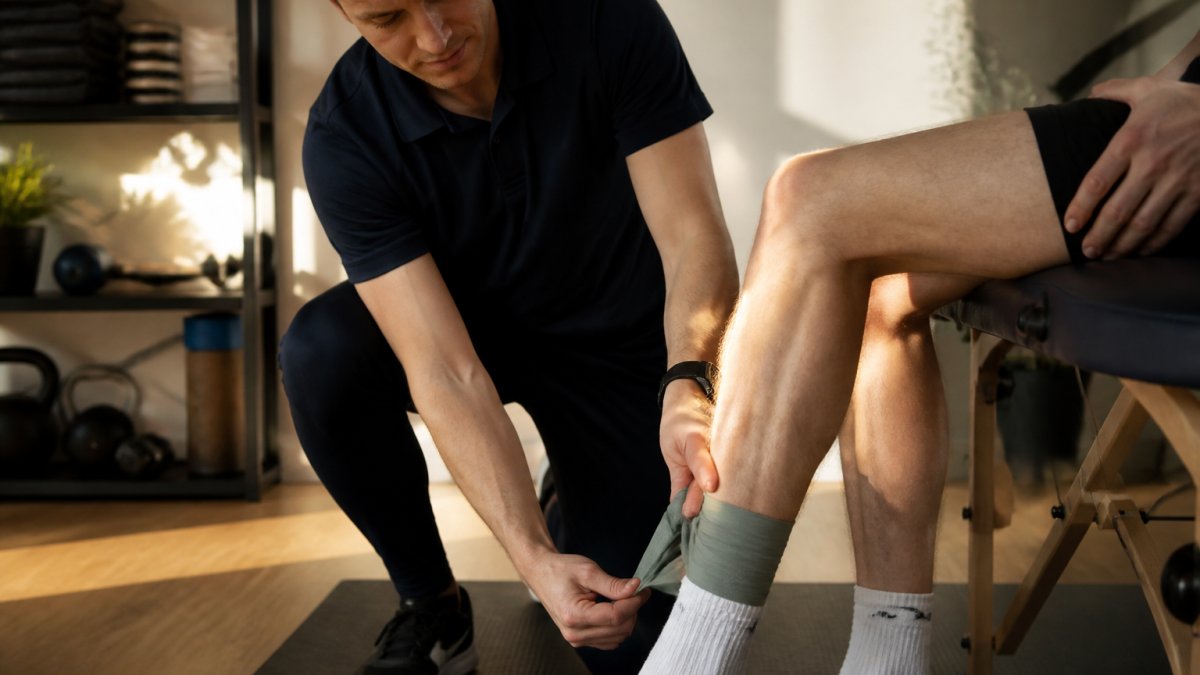
Starting to run again after shin splints requires patience. Begin by establishing a solid pain-free walking base, usually 1-2 weeks of daily walking without discomfort. Once walking feels normal, introduce very short running intervals.
The first week back should feel almost too easy. A common approach is alternating 30 seconds of easy jogging with 90 seconds of walking, repeated 6-8 times.
Progress by increasing run duration by 10-15 seconds per week whilst keeping walk breaks the same. By week 3-4 you might run 2-3 minutes continuously with 1-2 minute walk breaks; by week 6-8, walk breaks should disappear entirely.
Pain during this phase signals you to slow down. Mild discomfort resolving within an hour is generally acceptable.
Return to Running After Injury Plan: A Staged Approach
A structured return to running after injury typically spans 8-12 weeks across three phases. Each phase has specific goals, and progression depends on how your body responds, not calendar weeks alone.
Phase 1: Pain Management and Mobility (Weeks 1-3)
The first phase focuses on managing pain and restoring basic movement quality. Running is off the table entirely.
Your priorities are reducing inflammation, regaining pain-free range of motion, and beginning light strengthening. Ice or heat depending on what feels better. Gentle mobility work should happen daily: controlled stretching, easy joint movements, and slow exercises that don't provoke pain.
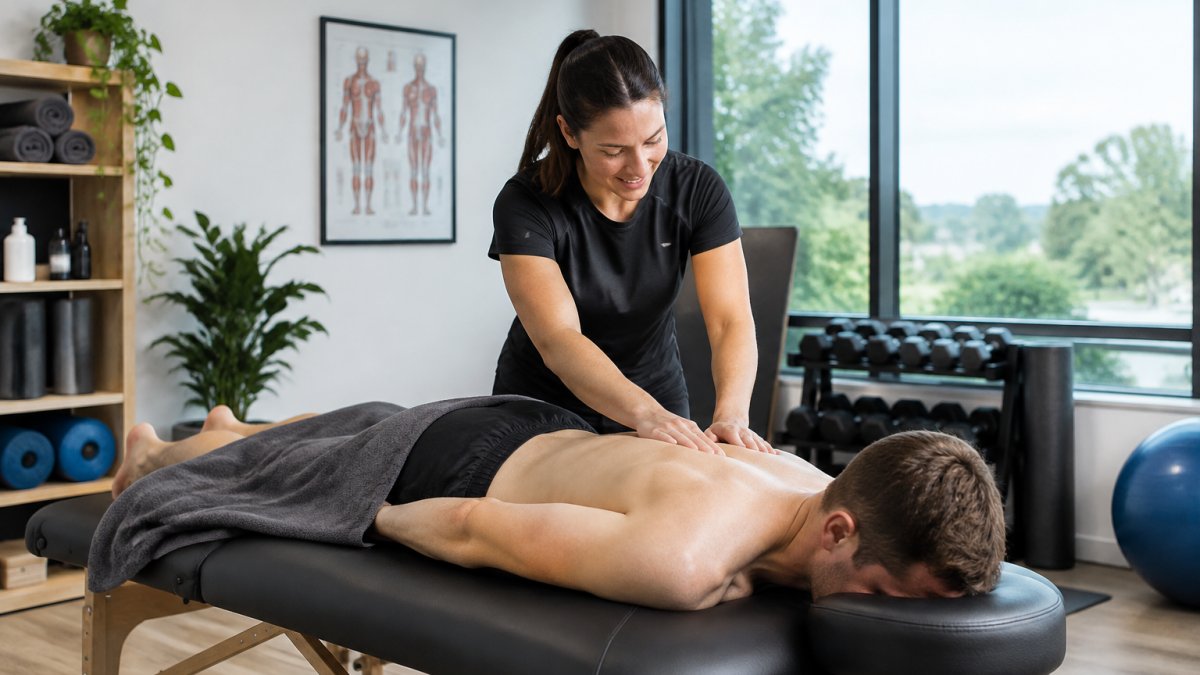
This is where hands-on treatment becomes valuable. Soft tissue mobilisation, joint mobilisation, and assisted stretching accelerate recovery and help you understand which movements are safe.
By the end of week 3, you should be pain-free during daily activities with most of your normal range of motion restored. If pain persists or worsens, the injury may be more serious than expected, get a proper assessment before progressing further.
Phase 2: Strength Building (Weeks 4-6)
Once pain is controlled and mobility restored, strength becomes the focus. Weak muscles are often the root cause of running injuries.
This phase introduces resistance exercises targeting the muscles that support running: glutes, hamstrings, calves, and hip stabilisers. Squats, lunges, single-leg work, and resistance band exercises form the backbone of most programmes, with progressive overload as your muscles adapt.
Core stability also matters enormously. Runners with weak cores often develop compensatory movement patterns that lead to injury. Planks, dead bugs, bird dogs, and rotational exercises should feature prominently.
By week 6, you should feel noticeably stronger: steadier single-leg balance, more controlled squats, easier daily activities. Strength gains at this stage directly translate to injury resilience later.
Phase 3: Running Reintroduction (Weeks 7-10)
This phase brings running back carefully. You're not returning to your previous volume, you're building a new foundation with better movement patterns and stronger supporting muscles.
Begin with walk-run intervals as described earlier, gradually extending the running portions and shortening the walk breaks. By week 10, you should be running continuously for 20-30 minutes at an easy pace.
Check availability and book online →
Strength work continues alongside running at reduced volume, maintaining it whilst your body adapts to running-specific demands.
Pain monitoring remains critical. Soreness 24-48 hours after running (delayed-onset muscle soreness) is normal. Sharp pain during running, or pain that doesn't resolve within a few hours, means you've progressed too quickly.
Running Injury Rehabilitation Exercises: Evidence-Based Movements
Effective rehabilitation isn't about endless exercises, it's about the right ones with proper form. These target the most common weaknesses in injured runners.
Lower Limb Strengthening
Single-leg glute bridges are foundational. Lie on your back with one knee bent, one leg extended straight. Push through the bent leg to lift your hips, squeezing your glute hard at the top. Hold 2 seconds, lower, repeat.
Calf raises, double and single-leg, strengthen the calf muscles that absorb impact during running. Stand with feet shoulder-width apart, rise onto your toes, hold briefly, lower.
Step-ups onto a low bench (20-30 cm) mimic the loading pattern of running stairs. Step up with control, drive through the front leg, step down slowly. This builds quad and glute strength whilst training deceleration control.
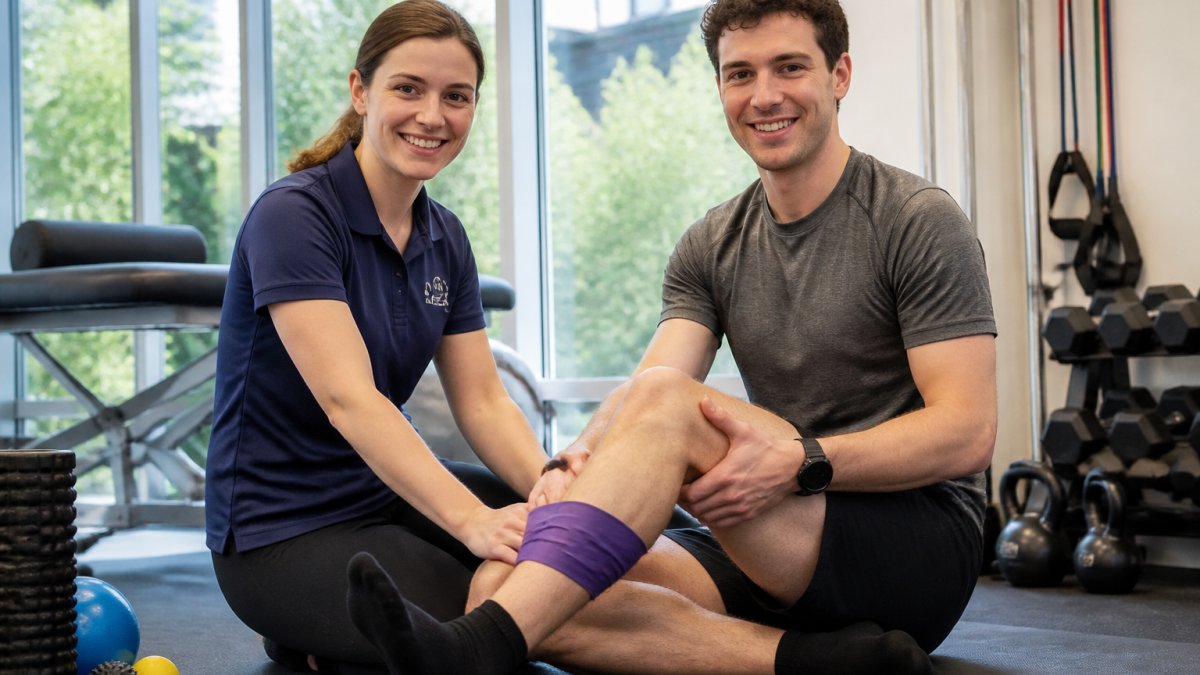
Lateral band walks with a resistance band around your legs target the hip abductors, crucial for lateral stability during running. Place the band above your knees, assume a slight squat, and step sideways against the resistance.
Core Stability and Hip Control
Planks remain one of the best core exercises. Your body should form a straight line from head to heels.
Dead bugs teach anti-rotation stability. Lie on your back with arms extended towards the ceiling and knees bent at 90 degrees. Slowly extend one arm overhead whilst straightening the opposite leg, return, alternate.
Bird dogs are similarly valuable. On hands and knees, extend one arm forwards and the opposite leg backwards, hold briefly, return, alternate.
Monster walks with a resistance band target hip abductors and external rotators dynamically. Place the band above your knees, assume a slight squat, and walk forwards with exaggerated sideways steps, keeping constant band tension.
Mobility and Flexibility Work
Mobility work, moving joints through their full range under control, matters more than static stretching for runners. 90/90 hip stretches open hip external rotation, often restricted in runners. Sit with one leg bent at 90 degrees in front of you, the other bent at 90 degrees to the side. Lean forwards gently.
Calf stretches should be part of daily routine. Stand facing a wall, place one foot forwards with knee bent, keep the back leg straight, and lean into the wall.
Pigeon pose (or figure-four stretches) opens the hip external rotators and glutes. Sit with one leg bent in front of you, the other extended behind, lean forwards.
Signs You Are Ready to Run After Injury
Returning to running too early is the most common mistake injured runners make. Several indicators tell you whether you're genuinely ready.
You should walk for 30 minutes without pain or swelling. If walking still causes discomfort, your tissues aren't ready for running's impact.
Single-leg balance should be steady for at least 30 seconds with eyes open.
You should perform single-leg squats with control, descending to about 45 degrees without your knee caving inwards or hip dropping. Sloppy single-leg squats suggest you're not ready.
Soreness from rehabilitation exercises should resolve within 24 hours. If you're still sore 48 hours after strength work, running impact will be too much.
Pain-free daily activities, stairs, standing, walking, should feel genuinely normal, not just tolerable.
Finally, you should feel mentally ready. Anxiety about re-injury is common, but if you're terrified of moving, build confidence through rehabilitation before adding running.
Check availability and book online →
Common Mistakes in Rehabilitation and How to Avoid Them
The most frequent error is progressing too quickly. Runners are impatient by nature, and the temptation to return to previous fitness levels is strong. Resist it.
Another common mistake is ignoring pain signals. Many runners conflate mild discomfort with weakness and push through genuine warning signs.
Neglecting strength work is equally costly. Runners often assume running itself will restore fitness, but it won't restore the specific strength deficits that caused injury.
Many runners also abandon rehabilitation exercises too early. Once running feels comfortable, the temptation to drop strength and mobility work is strong. Don't. These exercises prevent re-injury. Continue them throughout your return-to-running phase and beyond.
Finally, skipping professional assessment is risky. Some injuries look straightforward but have underlying complications. A qualified assessment, from a Graduate Sports Therapist or similar professional, can identify these issues early and save you months of frustration.
The Role of Professional Guidance in Your Recovery
Rehabilitation works best with professional oversight. A Graduate Sports Therapist brings expertise in movement assessment, injury mechanics, and exercise prescription that self-directed rehabilitation often lacks.
Early assessment identifies the root cause of your injury, not just the pain location. A therapist can spot movement dysfunctions, muscle imbalances, and biomechanical issues that contributed to injury.
Throughout rehabilitation, a therapist provides objective feedback on your progress. You might feel ready when you're not, or progress too conservatively when you could advance faster.
Hands-on treatment, soft tissue mobilisation, joint mobilisation, assisted stretching, accelerates recovery in early phases. These interventions reduce pain, restore mobility, and build confidence in movement.
A therapist also identifies when something isn't progressing normally.
Perhaps most importantly, professional guidance provides accountability and motivation. Rehabilitation is often boring and requires consistent effort over weeks.
Returning to running after injury is achievable, but it demands respect for the recovery process. If you're recovering from a running injury, contact Marlow Movement Clinic for a free 15-minute phone consultation to discuss your specific situation and begin your return to running with confidence.
Frequently Asked Questions
How do I know when I am ready to run after an injury?
You're ready when you can walk for 30 minutes without increased pain, perform single-leg balance for 30 seconds, and complete strength tests at 90% of your uninjured side. Pain should not increase during the day after exercise, and you should feel confident moving in multiple directions. A qualified professional can assess your readiness objectively before you return to running.
What is the difference between physiotherapy and sports therapy?
Both require graduate-level anatomy and physiology training. Physiotherapy traditionally focuses on helping people return to basic daily activities and work. Sports therapy specialises in musculoskeletal rehabilitation from the outset, targeting people who can manage daily tasks but struggle returning to exercise and sport. Sports therapy emphasises exercise physiology, biomechanics, and neuromuscular facilitation to restore athletic function.
How long does it typically take to return to running after an injury?
Recovery timelines vary significantly depending on injury severity, your training history, and adherence to rehabilitation. Shin splints may take 6-10 weeks, whilst more complex injuries can take 3-6 months or longer. Progressive rehabilitation follows phases: pain management (weeks 1-3), strength building (weeks 4-6), and running reintroduction (weeks 7-10). Your individual timeline depends on how quickly you progress through each phase safely.
Should I run through pain during rehabilitation?
No. Sharp pain is a warning sign to stop. Mild discomfort during gentle movement may be normal, but pain that increases during or after exercise indicates you've progressed too quickly. The '24-hour rule' helps: if pain is worse the next day, you've done too much. Working with a Graduate Sports Therapist ensures you distinguish between safe discomfort and harmful pain, keeping your progression on track.
What strength exercises help runners recover from injury?
Single-leg glute bridges, calf raises, step-ups, and side-lying hip abduction target lower limb stability. Planks and bird dogs build core strength essential for running. A tailored programme based on your specific injury ensures you address the root cause, not just symptoms.
How often should I run when returning after an injury?
Never increase running duration and frequency simultaneously. Rest days allow tissue adaptation and reduce re-injury risk. A structured plan tailored to your recovery stage prevents setbacks.
What sort of treatments does Marlow Movement Clinic provide?
Graduate Sports Therapy focuses on making the musculoskeletal system work better: bones, joints, muscles, and soft tissue structures. Treatment combines hands-on techniques including soft tissue mobilisation and assisted stretching with targeted exercise rehabilitation based on biomechanics and neuromuscular facilitation. This integrated approach addresses both pain relief and functional movement restoration, helping runners return confidently to training.
How is a progressive rehabilitation plan different from just doing exercises on my own?
A professional plan is tailored to your specific injury, movement patterns, and goals, progressing systematically through defined phases. A Graduate Sports Therapist assesses your readiness, adjusts intensity based on your response, and identifies compensatory patterns you might miss alone. Professional guidance reduces re-injury risk, accelerates safe recovery, and ensures exercises address the root cause rather than just symptoms. Many runners who try self-directed exercise plateau or re-injure because progression isn't properly managed.