 ultimate-guide
Sports Massage Marlow: A Guide to Injury Recovery
Table of Contents
- Sports Massage in Marlow: What It Treats and Who It Helps
- Sports Massage for Injury Recovery: How Hands-On Work Fits In
- How Long Is a Sports Massage, and How Often Do You Need One?
- Rehabilitation Exercises That Keep Progress Going Between Sessions
- Sports Therapy Benefits Beyond Pain Relief
- What to Expect at Your First Appointment
- Frequently Asked Questions
Last Updated: October 2, 2026
Sports Massage in Marlow: What It Treats and Who It Helps
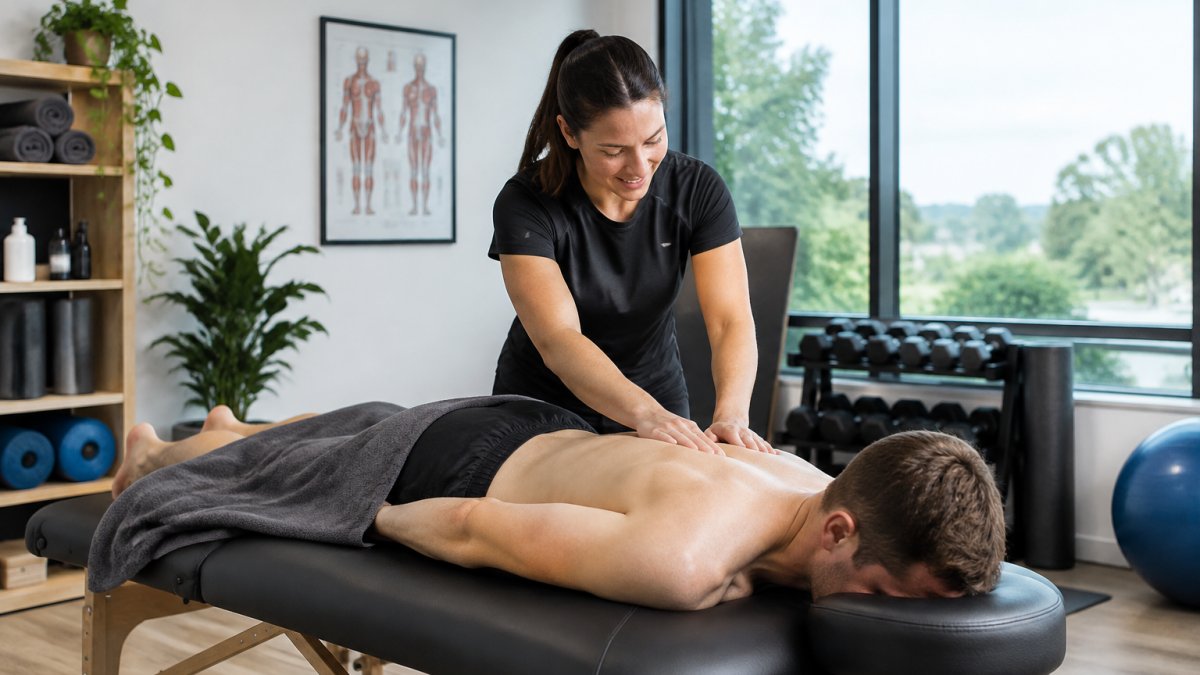
Sports massage Marlow is hands-on soft tissue work aimed at musculoskeletal pain: mobilising the joints, muscles and connective tissue that control how you move. At Marlow Movement Clinic, we treat runners, office workers and active adults who can manage daily life but cannot get back to the sport or training they love.
The scope is wider than the name suggests. You do not need to be an athlete to benefit.
What it treats:
- Neck, shoulder and lower back pain linked to desk work
- Knee, hip and ankle complaints from running or racket sports
- Muscle tightness and restricted joint movement
- Recurring niggles that never quite settle
Who it helps:
- Runners and gym-goers training for a specific event
- Office workers with repetitive strain or posture-related pain
- Active adults managing long-standing back or joint discomfort
A common mistake is waiting until pain becomes unmanageable before booking. Earlier hands-on treatment usually means fewer sessions overall.
What a Session Involves
A session combines assessment, hands-on soft tissue work and movement. Your Graduate Sports Therapist will ask about your history, watch you move, then work directly on the tissue causing the problem.
Techniques include soft tissue mobilisation, assisted stretching and neuromuscular facilitation. You will also leave with something to do at home, because hands-on work alone rarely holds a result. The Chartered Society of Physiotherapy guidance on musculoskeletal care makes the same point: active rehabilitation is central to recovery, not an optional extra.
Expect to be asked questions rather than simply treated. If nobody has watched you squat or reach overhead, they are guessing.
Sports Massage for Injury Recovery: How Hands-On Work Fits In
Sports massage for injury recovery works best as one part of a rehabilitation plan, not as a standalone fix. Hands-on treatment reduces pain and restores tissue movement; targeted exercise then rebuilds the strength and control that stopped the injury happening in the first place.
Think of it as two jobs. The first is settling the irritated tissue so you can move without guarding. The second is loading that tissue progressively so it adapts.
Skip the second job and the pain returns. This is the pattern we see most often: someone gets relief, feels better, stops the exercises, and is back where they started within weeks.
Where hands-on work earns its place:
- It reduces pain enough for you to start moving properly
- It identifies which structures are restricting movement
- It gives immediate feedback on what your body tolerates
Where it falls short: it cannot build strength for you. That part is your job, guided by a plan.
How Long Is a Sports Massage, and How Often Do You Need One?
A sports massage Marlow session typically runs 30 to 60 minutes, with 60 minutes standard for a first appointment that includes assessment. Follow-up sessions can be shorter once your history is known.
Frequency depends on whether you are managing an active injury or maintaining a healthy training load.
Situation | Typical Session Length | Typical Frequency |
|---|---|---|
Acute injury, recently flared | 45-60 minutes | Weekly, tapering as pain settles |
Chronic long-term pain | 45-60 minutes | Weekly to fortnightly |
Training load management | 30-45 minutes | Fortnightly to monthly |
Maintenance, no current pain | 30-45 minutes | Monthly or around events |
These are general patterns, not a prescription. Your own plan depends on your history, your training and how your tissue responds.
The thing nobody tells you about frequency is that more sessions is not automatically better. If you are not doing anything between appointments, you are paying for short-term relief on repeat. Progress comes from what happens in the days after you leave.
Rehabilitation Exercises That Keep Progress Going Between Sessions
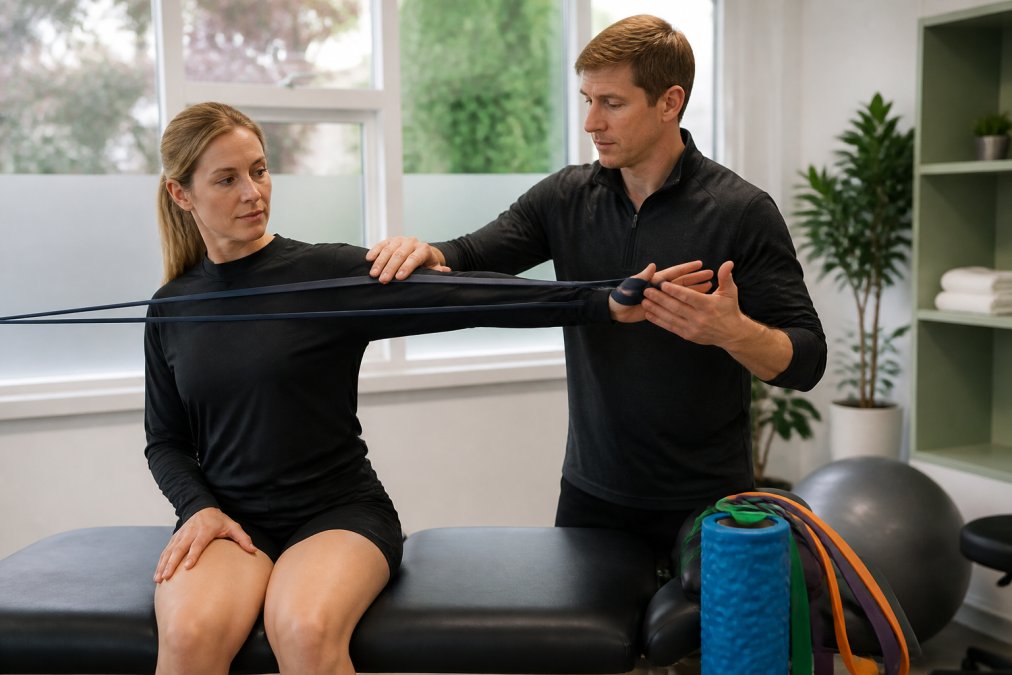
Rehabilitation exercises are the part of your plan that decides whether the improvement lasts. They should be specific to your injury, progressive in difficulty, and simple enough that you actually do t\\hem.
Check availability and book online →
A useful plan usually has three layers:
- Mobility work to restore range and flexibility you have lost
- Strength work to rebuild capacity in the injured tissue
- Control work to retrain how you move under load
What most guides miss is the order. Loading a joint before you have the range to move it properly just irritates it. Range first, then strength, then control under speed or fatigue.
Setup typically takes ten to fifteen minutes a day. That is enough to make a difference if you are consistent.
The NHS information on musculoskeletal pain and staying active is clear that keeping active supports recovery for most musculoskeletal complaints. Your plan should fit around work and training, not compete with them.
Sports Therapy Benefits Beyond Pain Relief
Sports therapy benefits reach further than a reduction in pain. Clients consistently report better movement confidence, clearer understanding of their own body, and a plan they can follow without guessing.
The wider gains:
- Improved mobility in joints that had stiffened
- Better awareness of which movements provoke symptoms
- Confidence to return to sport, work and daily activity
- A clear route forward instead of a cycle of flare-ups
This is the difference between being handed a sheet of exercises and understanding why each one is there. When you know what a movement is for, you are far more likely to keep doing it.
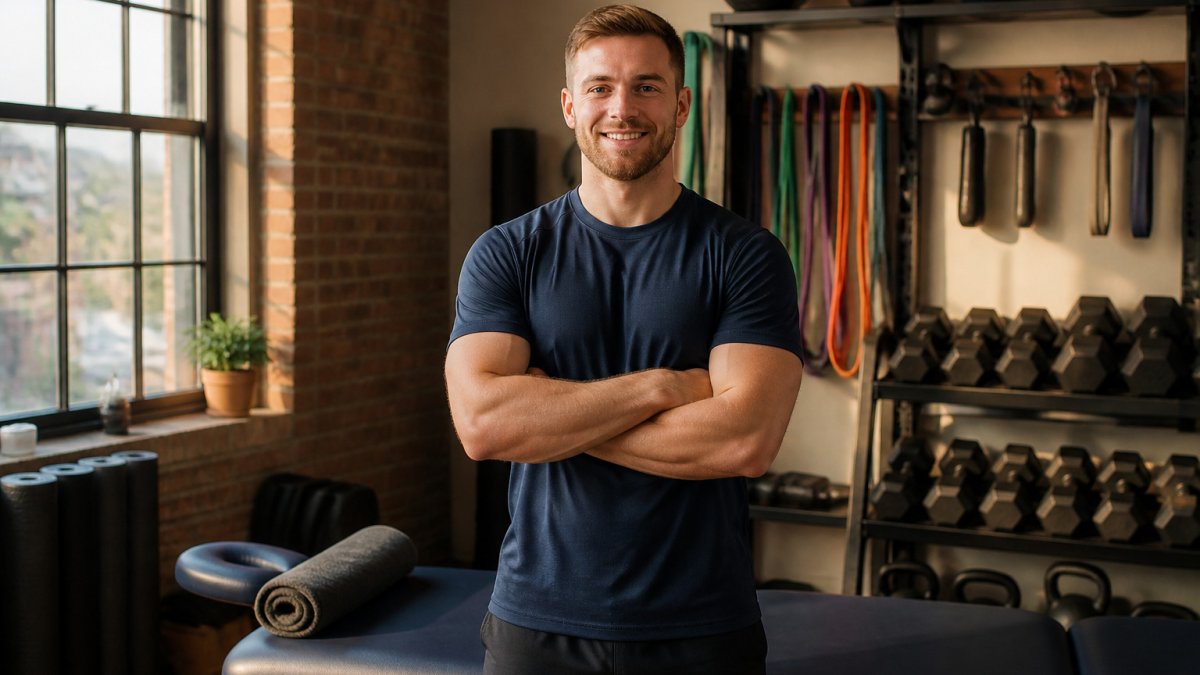
Mark Skoyles, our Clinical Lead, has been in practice since 1996 and holds a Sports Therapy BSc (Hons). That experience shows up in the assessment: the ability to spot which structure is actually driving the problem rather than treating wherever it hurts. Marlow Movement Clinic holds a 5.0 rating on Google from +99 reviews, many of them describing neck, shoulder and knee pain relief.
What to Expect at Your First Appointment
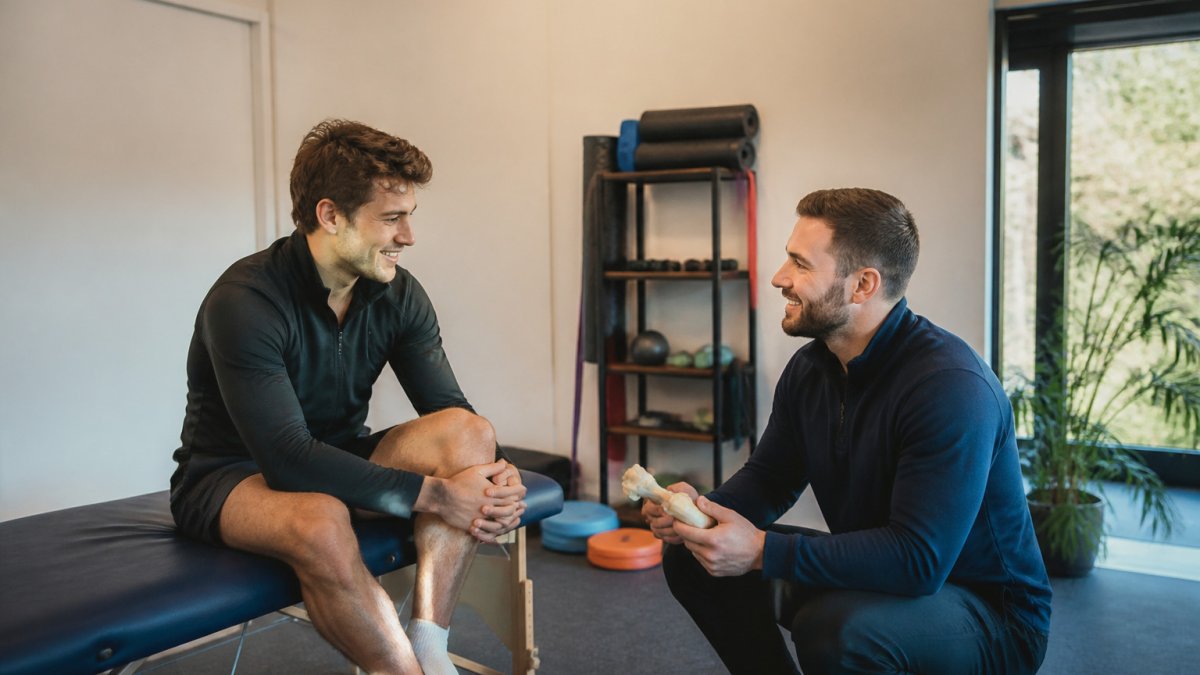
Your first appointment starts with a conversation and an assessment, not just treatment. Your Graduate Sports Therapist will take a history, examine how you move, explain what they found, and agree a plan with you before any hands-on work begins.
Come dressed to move. Shorts and a t-shirt let us assess the area properly.
You do not need a GP referral to book. Same-day appointments are often available, and we offer a free 15-minute phone consultation if you would rather talk through your situation first.
Expect to leave with three things: a clear explanation of what is driving your pain, a treatment plan with a realistic timeframe, and exercises and stretches to start that day. If you have had pain for years and tried several approaches, the assessment is where the difference shows up. We are looking for the cause, not just the symptom.
Frequently Asked Questions
What is the difference between sports therapy and other clinical treatments?
Graduate anatomy and physiology education is the same. Basic training for some clinical roles is geared around getting people out of a hospital bed and back to home or work, with speciality pathways followed after graduation. Sports Therapy training is based on treating musculoskeletal pain and outpatient rehabilitation from the start. The focus is on people who can work and do simple daily tasks but struggle to get back to their favourite exercise or sport. At Marlow Movement Clinic, every plan is built around that goal.
How often should I have a sports massage for injury prevention?
There is no single schedule that suits everyone. Frequency depends on your training load, injury history and how your tissues respond between sessions. Many active people find a session every few weeks works during heavy training blocks, while someone recovering from an injury may need closer spacing at first. A Graduate Sports Therapist can assess your movement, review your training and recommend a realistic interval rather than a fixed package.
Can sports massage help with chronic office-related pain?
Hands-on soft tissue work can ease muscular tension in the neck, shoulders and lower back that builds up from prolonged sitting. At Marlow Movement Clinic, treatment is combined with targeted rehabilitation exercises and practical advice on movement breaks and desk setup. This approach suits office workers dealing with repetitive strain or posture-related discomfort, not just athletes. Book a free 15-minute phone consultation to discuss whether it fits your situation.
Is sports massage suitable for non-athletes?
Yes. Sports massage is simply a set of hands-on techniques applied to muscles, joints and soft tissue, and it works just as well for someone with a stiff back from desk work as for a runner. At Marlow Movement Clinic, clients range from office workers to active adults managing chronic joint pain. The treatment is adapted to your goals, whether that is getting through the day comfortably or returning to a sport you enjoy.
Long-standing pain that has not responded to anything else is frustrating, and it is the situation we see most often. Marlow Movement Clinic combines hands-on treatment with practical rehabilitation plans, so you get both relief and a route back to the activity you have been avoiding. Same-day appointments, a free 15-minute phone consultation and a Clinical Lead in practice since 1996 are all part of how we work. Get started with Marlow Movement Clinic and book online today.