 how-to
Myofascial Release Treatment: What It Is & How It Works
Table of Contents
- What Is Myofascial Release Treatment?
- Myofascial Release for Back Pain
- Myofascial Release Techniques Used in Clinical Practice
- Self Myofascial Release: What You Can Do at Home
- Myofascial Release vs Massage: Key Differences
- What to Expect From Myofascial Release Treatment
- Frequently Asked Questions
Last Updated: 11 October 2026
What Is Myofascial Release Treatment?
Myofascial release treatment is a hands-on therapy that targets myofascia, the connective tissue surrounding every muscle in your body. It works by applying sustained, gentle tension to tight areas, helping restore movement and reduce pain. At Marlow Movement Clinic, we use myofascial release treatment as part of our approach to help clients overcome musculoskeletal pain and regain confidence in their movement.
Myofascia can become contracted, compressed and dehydrated through injury, repetitive strain, or poor posture. When this happens, it can limit how freely your muscles and joints move. Myofascial release treatment works with your body to stimulate a healing response by promoting a rebalancing of tension across the body, improving flexibility and reducing discomfort. Many people feel results within a one session, though the timeline for sustained relief depends on how long restrictions have been present.
This treatment differs from standard massage. Rather than working superficially, myofascial release treatment applies deeper, sustained pressure to specific problem areas. The goal is not relaxation alone, but restoring function to your musculoskeletal system.
Myofascial Release for Back Pain
Back pain affects millions of people across the UK, whether from desk work, sports injuries, or age-related wear. Myofascial release for back pain addresses one of the root causes: tight fascia and muscle restrictions that limit spinal, hip and shoulder movement.
Your back pain often stems from contracted muscles that have adapted to chronic poor posture or previous injury. These muscles tighten, their fascia becomes restricted, and then movement becomes painful. Myofascial release for back pain targets these tight structures directly, restoring the mobility your spine needs to function properly.
Office workers commonly experience lower back pain from sitting. Athletes often develop upper back tension from repetitive movements. Myofascial release for back pain works for both, because it treats the underlying restriction rather than just the symptom.
The treatment typically focuses on the erector spinae muscles along your spine, and the broader muscles across your back, hips and shoulders and the fascia connecting them. By mobilising these structures, myofascial release for back pain reduces the tension that ‘locks-down’ your spine.
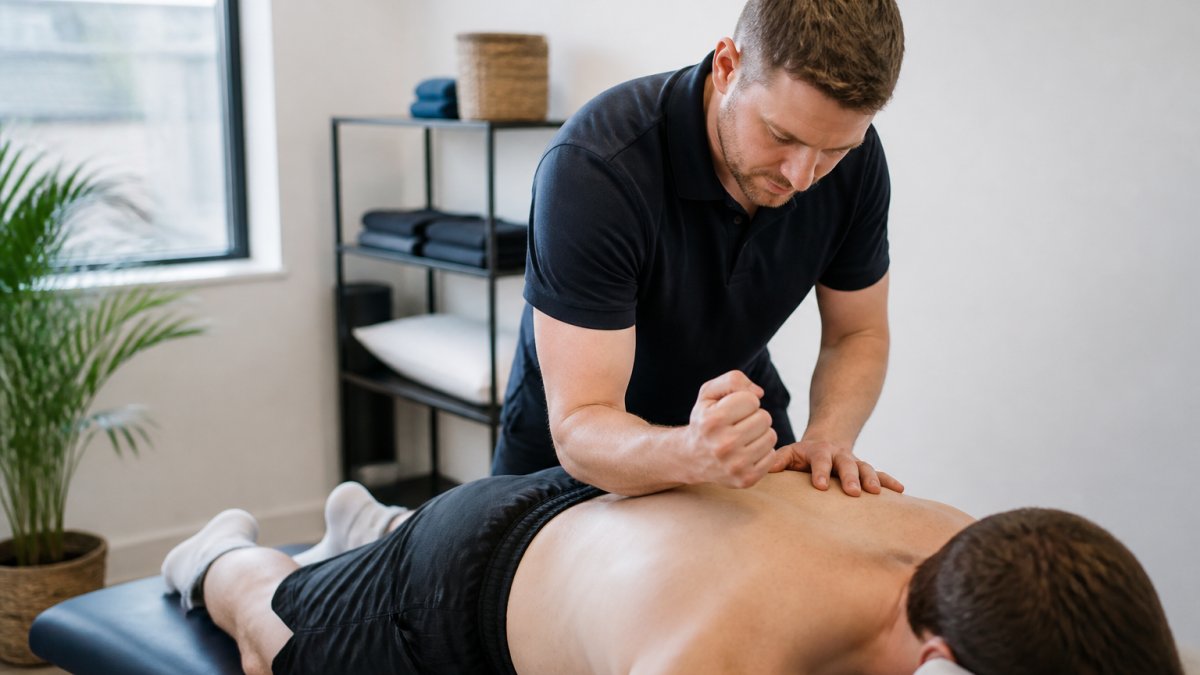
Professional demonstrating myofascial release treatment technique on client's back.
Myofascial Release Techniques Used in Clinical Practice
Soft tissue mobilisation
Soft tissue mobilisation is the foundation of myofascial release treatment. It involves applying sustained tension to restricted areas using hands, forearms, or specialised tools. The tension stimulates the neuromuscular and myofascial systems to restores normal tissue quality
A therapist performing soft tissue mobilisation uses their hands to feel exactly where the restriction lies. They apply pressure gradually, allowing the tissue to release naturally. This is different from aggressive massage, which can trigger the body's protective response and actually increase tension.
Effective soft tissue mobilisation requires skill. The therapist must identify the exact depth and location of the restriction, then apply the right amount of pressure for long enough to create change. Too little pressure achieves nothing. Too much causes injury.
Most clients notice improved movement and reduced pain after soft tissue mobilisation. The tissue quality improves, meaning muscles can contract and lengthen more freely. This is why targeted soft tissue mobilisation forms the first part of most treatment plans at Marlow Movement Clinic.
Assisted stretching and neuromuscular facilitation
Assisted stretching combines passive stretching with active muscle engagement. Your therapist guides you through a stretch while you provide resistance, then release. This technique resets your nervous system's understanding of how far your muscle should stretch.
Check availability and book online →
Neuromuscular facilitation works by temporarily contracting a muscle, then stretching it. The contraction tells your nervous system it is safe to allow greater length. This is far more effective than static self-stretching alone, with chronic tightness, self-stretching means stretching around the tight spot, rather than the specific structure that needs stretching.
These techniques work together. Soft tissue mobilisation removes physical restrictions. Assisted stretching and neuromuscular facilitation teach your nervous system to allow greater movement. Combined, they create lasting change.
Self Myofascial Release: What You Can Do at Home
Self myofascial release allows you to maintain progress between sessions. It involves using tools or your own body weight to apply pressure to tight areas. Common tools include foam rollers, massage balls, and lacrosse balls.
Self myofascial release works best on larger muscle groups like your back, thighs, and calves. Smaller or more sensitive areas require professional hands-on treatment. Start gently and increase pressure gradually. If something hurts sharply, stop immediately.
Effective self myofascial release techniques include:
- Roll slowly across the muscle, pausing on tight spots for 30 seconds
- Use a massage ball against a wall to target your back or shoulders
- Apply sustained pressure with your thumbs to tight areas in your forearms or legs
- Never roll directly over bones or joints
Most people benefit from self myofascial release three to four times per week. Consistency matters more than intensity. Brief sessions done regularly beat occasional aggressive sessions.
Your therapist at Marlow Movement Clinic will show you exactly which areas need self myofascial release and how to do it safely. This bridges the gap between professional treatment and your daily life, speeding your recovery.
Myofascial Release vs Massage: Key Differences
Myofascial release vs massage addresses a common question. While both involve hands-on treatment, they work differently. Understanding the distinction helps you choose the right approach for your needs.
Massage focuses on relaxation and improving circulation. It feels pleasant and reduces stress. Myofascial release treatment targets specific restrictions in fascia and muscle. It can feel uncomfortable during treatment because the therapist is working on problem areas.
Massage uses flowing, continuous movements. Myofascial release treatment uses sustained pressure on tight spots. A massage therapist treats broad areas. A therapist performing myofascial release treatment focuses on specific restrictions identified through assessment.
The goal differs too. Massage aims for relaxation. Myofascial release treatment aims to restore function. You might feel sore after myofascial release treatment as the tissue adapts, whereas massage typically relaxes soft tissue during a treatment.
Both have value. Some people benefit from massage for stress relief. Others need myofascial release treatment to resolve pain and restore movement. Many benefit from both at different times. Your therapist will recommend what suits your situation.
Check availability and book online →
According to research on soft tissue therapy techniques, hands-on treatment combined with exercise produces better long-term outcomes than either approach alone.
What to Expect From Myofascial Release Treatment
Your first appointment begins with assessment. Your therapist asks about your injury history, current pain, and movement limitations. They observe how you move and identify restrictions through physical examination.
Treatment sessions typically last 30 to 60 minutes. Your therapist applies sustained pressure to tight areas, gradually releasing restrictions. You might feel discomfort during treatment, particularly on the first visit. This is normal. The tissue is adapting to the pressure.
Between sessions, you will receive exercises and self myofascial release techniques to maintain progress. Consistency with these matters. Many clients see better results when they commit to home exercises than those who rely on treatment alone.
Most clients notice improvement within two to five sessions. Chronic restrictions take longer. Acute injuries often respond faster. Your therapist will discuss realistic timelines based on your specific situation.
At Marlow Movement Clinic, we combine myofascial release treatment with targeted exercise rehabilitation. This dual approach addresses both the restriction and the underlying movement pattern that created it. The goal is not just pain relief, but restoring your confidence to return to sport, work, and everyday activity.
Myofascial release treatment works because it addresses the root cause of many pain problems: restricted fascia and muscle tension. Whether you are struggling with back pain, recovering from injury, or seeking to improve your movement, this approach offers real results. Marlow Movement Clinic specialises in hands-on myofascial release treatment combined with practical rehabilitation plans. Our Graduate Sports Therapists assess your specific restrictions and create a treatment plan tailored to your goals. Evidence supports combined hands-on and exercise-based approaches for musculoskeletal pain management. Book a free 15-minute phone consultation to discuss your situation and how we can help you regain confident movement.
Frequently Asked Questions
What is myofascial release treatment?
Myofascial release treatment targets the fascia—connective tissue surrounding your muscles and soft tissue structures. A Graduate Sports Therapist applies sustained pressure or controlled movements to release tension and restore mobility. It's based on exercise physiology and biomechanics to improve how your musculoskeletal system functions, helping you move better and reduce pain during daily activities and sport.
How does myofascial release treatment differ from massage?
Massage focuses on relaxation and circulation, whilst myofascial release is a targeted treatment aimed at restoring movement and function. Myofascial release uses sustained pressure and specific techniques like soft tissue mobilisation and neuromuscular facilitation to address the root cause of pain. It's part of a broader rehabilitation approach rather than a standalone relaxation therapy.
Can I do self myofascial release at home?
Yes, self myofascial release can support your recovery between appointments. Simple techniques include gentle stretching, foam rolling on larger muscle groups, and self-massage. However, a qualified therapist can identify exactly which tissues need releasing and teach you safe, effective techniques tailored to your injury. Professional treatment combined with home practice typically produces better results than either alone.
How long does myofascial release treatment take to work?
Response times vary depending on how long you've had pain and the severity of your injury. Some people notice improved movement and reduced pain within a few sessions, whilst others with chronic pain may need more time. Your therapist will create a personalised rehabilitation plan and monitor your progress, adjusting treatment as needed to help you regain confidence in moving and returning to your everyday activities or sport.